

A Mine That Has Moved Beyond Promise
There is a stage in the life of every mining development when the conversation has to change.
At first, the language is full of anticipation: feasibility, resource growth, commissioning, ramp-up, first concentrate, nameplate capacity. The mine is discussed in terms of what it could become. But once the first headlines pass, a different test begins. The plant must stabilise. Ore sources must align. Weather, water and power begin to intervene. Costs reveal themselves. The asset must show that it can operate not only in theory, but in adversity.
That is where Sandfire Resources’ Motheo Copper Mine now stands.
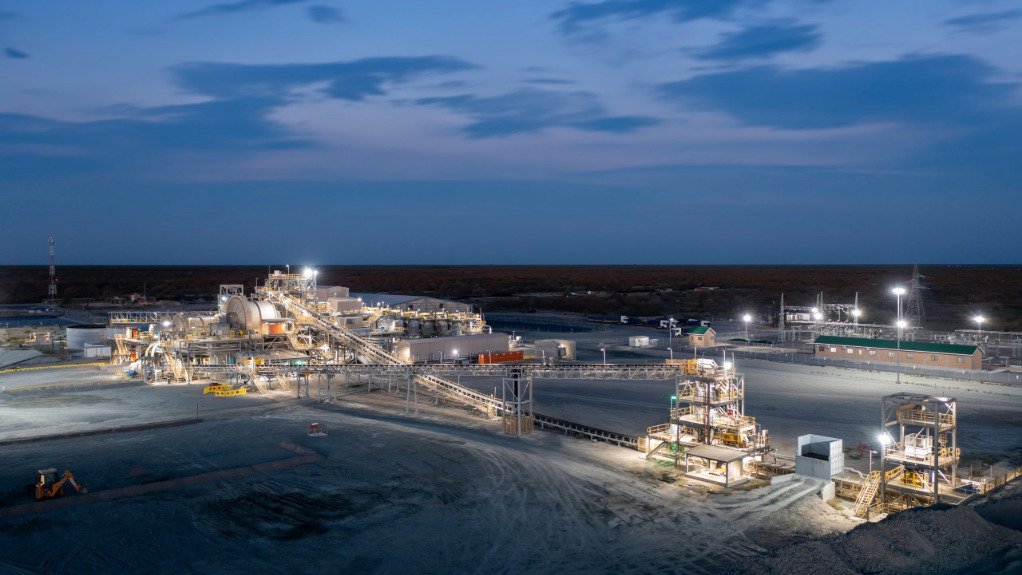
Located in Botswana’s emerging Kalahari Copper Belt, Motheo is no longer simply an example of successful project delivery. It is becoming something more consequential: a multi-deposit copper hub, a major economic contributor to Botswana, and an operation beginning to align production growth with long-term decarbonisation. What began as a promising new mine has become one of the clearest demonstrations that Botswana’s copper future is not speculative. It is taking industrial shape.
From First Concentrate to a Functioning Production Platform
When first concentrate was produced in May 2023, Motheo had already earned industry attention. Built for around $400 million, the mine had been delivered on time and on budget despite the complications of the pandemic period — no small achievement for a remote resource project in southern Africa. Yet construction success and operating maturity are not the same thing. The real question was always what would happen next. Could Motheo transition from a well-executed development into a durable operating business?
The answer, increasingly, is yes.
The original processing plant was designed for 3.2 million tonnes per annum. That capacity did not remain static for long. Sandfire fast-tracked expansion to 5.2 Mtpa, while bringing the nearby A4 deposit into the operating picture as a second ore source alongside T3. The result is an operation now running at record rates of 5.6 Mtpa, ahead of the earlier design ceiling and delivering more copper than originally envisioned. In FY25, Motheo recorded its first full year of commercial production, delivering 58,000 tonnes of copper equivalent, up 29% year on year. The mine has since remained on track for around 59,000 tonnes CuEq in FY25, with expectations of approximately 60,000 tonnes in FY26.
That progression matters because it changes how Motheo should be read. This is no longer simply a commissioning story. It is now an operating story and increasingly a systems story where the relationship between multiple ore sources, a centralised plant, logistics, power, water and future expansion begins to define the asset more than the original build itself.
Q3 FY25: What Resilience Actually Looks Like
In mining, resilience is often discussed too broadly. At serious operations, it is rarely abstract. It is visible in how mine plans respond to disruption, how teams re-sequence activity under pressure, and whether the plant can keep generating value when ideal conditions disappear.
Motheo’s third quarter of FY25 offered exactly that kind of test.
An extreme weather event severely affected the operation and inundated the active pits, presenting the type of interruption that can unsettle a younger mine. At the same time, power supply reductions added further strain. Yet even in these conditions, Motheo delivered 13.4 thousand tonnes of copper equivalent in the quarter, including 12.1 thousand tonnes of contained copper and 0.4 million ounces of contained silver. Ore processed reached 1.4 million tonnes, down 7% quarter on quarter, but the more revealing point was that the operation continued to function and remained on track for full-year guidance. The mine plan shifted focus to Stage 2 of the T3 pit, and the response by the site team appears to have prevented a weather event from turning into a deeper operational failure.
That distinction matters. Many operations can perform in stable quarters. Far fewer show composure when pits flood, supply is constrained and production still needs to be protected. Motheo’s Q3 FY25 result did not read like a quarter untouched by disruption. It read like a quarter in which disruption had been managed.
There is another useful signal within the numbers. Capital expenditure guidance was revised down to $85 million from $96 million, reflecting deferred projects and continuing development priorities. Mine development expenditure eased to $10 million in Q3 FY25, while a further $6 million was invested in construction, sustaining and strategic projects. In other words, even during a disrupted period, the operation was not merely defending output. It was still building forward. That is a subtle but important marker of confidence inside a growing asset.
Record Throughput, Delayed Grade, and a More Mature Operation
One of the more telling features of Motheo’s recent performance is that the mine’s physical operating infrastructure has often shown more strength than the headline production numbers initially suggest.
By late 2025 and into FY26, Sandfire reported record annualised mining and processing rates, even as higher-grade ore access from A4 was delayed by the lingering consequences of the earlier flooding event. This is the sort of nuance that often gets lost in simplified production narratives. The issue was not that the system could not run. The issue was that ore sequencing had been affected. The distinction is important.
A mine with weak infrastructure underperforms because it cannot sustain mining and processing activity. A mine with sound infrastructure but disrupted ore access may still show strong mining and milling rates while waiting for the grade profile to normalise. Motheo increasingly appears to belong to the second category. The plant is working. The operating platform is strong. The temporary constraint has been how quickly higher-grade material can be brought fully back into the schedule.
This matters because it says something about the mine’s underlying quality. Record throughput under imperfect conditions suggests an operation that is growing more robust, not less.
The Shift From Single Mine to Copper Hub
The most important thing about Motheo may not be the current output figure at all. It may be the structure around it.
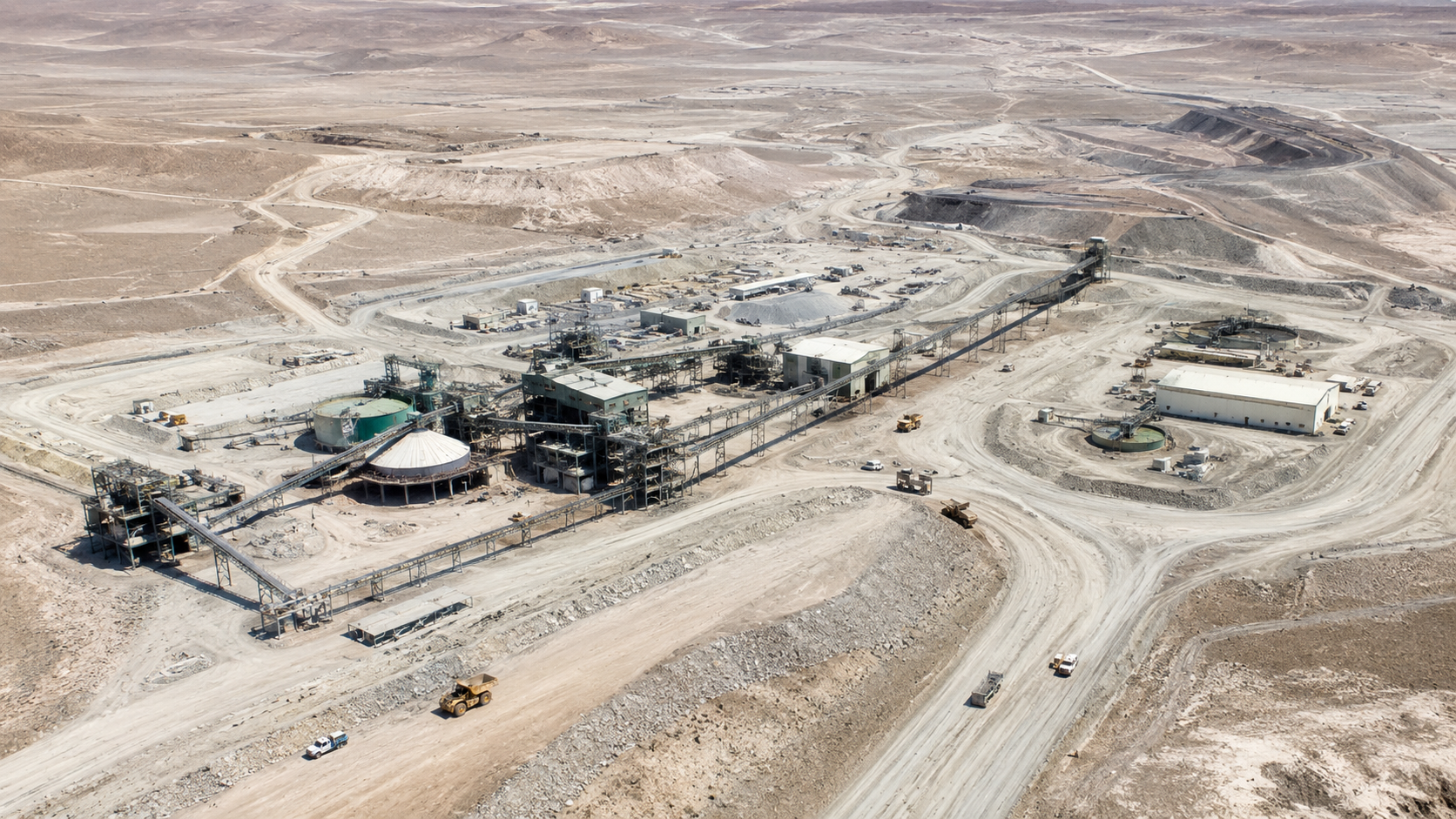
From the outset, the operation was conceived as more than a stand-alone pit and plant. The central processing facility was designed to take feed from multiple deposits across the broader Kalahari Copper Belt. That vision is now becoming more tangible.
T3 and A4 already operate as twin sources feeding the same plant. A1, located approximately 20 kilometres north-east of the processing facility, has become the next major growth focus. Sandfire completed more than 20 kilometres of drilling there in FY25, with a maiden Ore Reserve and pre-feasibility study targeted for FY26. Development infrastructure, including a 25-kilometre haul road, has been identified. Once A1 advances into production, it is expected to extend mine life materially beyond the current horizon and reinforce the broader Motheo Hub concept.
This is where Motheo becomes more strategically important than a simple production number suggests. Centralised plants are powerful industrial anchors when enough satellite mineralisation exists within trucking range. They allow capital already spent on processing infrastructure to be leveraged repeatedly across a district. They turn exploration success into more than a geology story; they turn it into a regional production strategy.
Sandfire’s landholding across the Kalahari Copper Belt is extensive, and exploration spend has continued to rise. That sends a clear message. Motheo is not being treated as a mine nearing definition. It is being treated as a platform still being expanded.
Solar Power and the Next Phase of Operational Discipline
One of the more compelling developments around Motheo is not in the pit or the plant, but in how the operation will increasingly be powered.
Release has signed a seven-year lease agreement with Tshukudu Metals Botswana to build a 21 MW solar power plant for Motheo. Expected to begin operating by late 2026, the project is designed to generate around 40 GWh annually and meet roughly 30% of the mine’s power demand. Structured as a lease-to-own arrangement, the project gives Sandfire access to utility-scale solar without upfront capital expenditure, while allowing ownership to transfer after the lease term.
The implications are significant.
First, this is a practical cost story. Energy typically accounts for a meaningful share of copper mining operating costs, and solar reduces exposure to future tariff volatility while preserving capital for core mining and development activity. Second, it is a decarbonisation story. A cleaner power mix lowers Scope 2 emissions and aligns the site more closely with the expectations increasingly placed on global copper producers. Third, it is a regional story. Botswana’s solar conditions are exceptionally strong, particularly in the Ghanzi district, where irradiance levels and clear-sky days create ideal operating conditions for large-scale solar generation.
But beyond cost and carbon, this project says something about Motheo’s maturity. Mines that begin to reshape their energy mix are no longer just trying to produce. They are trying to optimise their long-term operating structure. For Motheo, solar is not an ornamental ESG addition. It is part of the mine’s next efficiency layer.
There is also a broader irony here, and an elegant one: Motheo produces copper, one of the central metals of the global energy transition, and is now beginning to power a meaningful share of that copper production with the same renewable systems that copper helps make possible.
Botswana’s Economic Stake in the Asset
Mining features often quote economic impact figures without asking what they actually signify. The more serious question is how deeply the operation is embedding value into the host country — through jobs, taxes, procurement, capability and regional development.
On that measure, Motheo is becoming increasingly important to Botswana.
Sandfire has stated that it expects to inject close to P40 billion into Botswana’s economy over the next decade, through taxes, royalties, local procurement and related economic activity. The company says it contributed around P4.2 billion in the previous year alone as the operation ramped up. These are substantial figures in any context, but especially in Botswana, where copper is emerging as a more important complement to the country’s historic diamond base.
CEO Brendan Harris has described Motheo as a success story for both Sandfire and Botswana, and there is reason to take that seriously. The mine is already operating at around 5 million tonnes per annum, with expansion beyond that level already realised in practice. Just as importantly, the operation appears to be sharing more of its structure with the local economy than many mines manage to do in their early years.
More than 2,000 people are employed at Motheo, with the overwhelming majority being Batswana citizens. Over 78% of managers are also Batswana. That second number is one of the most meaningful in the entire story. Local employment is valuable. Local management depth is transformative. It indicates that knowledge, accountability and decision-making are increasingly being rooted in-country.
For Botswana, Motheo is therefore more than a mining project. It is part of a wider economic transition — one that could help establish the Kalahari Copper Belt as a serious second pillar in the country’s resource future.
Partnerships Behind the Performance
No mine reaches this level of output, stability and expansion momentum on owner effort alone. Behind Motheo’s production performance sits a delivery ecosystem that has helped turn the asset from a well-executed build into a functioning copper hub. At the mining face, African Mining Services (AMS) has been central as the open-pit mining contractor at T3 and A4, under a contract structure that also includes local joint-venture participation. On the engineering side, Lycopodium, working through ADP Kukama, has supported both the original process plant and the later 5.2 Mtpa expansion, helping translate initial development success into scalable operating capacity.
Around that core, a wider group of specialist partners has strengthened the mine’s operating backbone. Barloworld Equipment has supported the site’s heavy mining fleet, while Sandvik Mining and Rock Solutions was part of the equipment-partner group that helped AMS commence mining ahead of schedule during the project’s development phase. AECI Botswana (Pty) Ltd has established a presence at Motheo through its explosives and specialty chemicals business, including roles tied to blasting support and Mobile Manufacturing Unit operations. Kwa Nokeng Oil, which describes itself as a fuel partner to Motheo, has supported the mine with petroleum and fuel-related services critical to keeping a remote operation moving reliably.
The site’s broader functionality has also been reinforced well beyond the pit and plant. DomeShelter Australia supplied a large tyre change bay shelter for AMS at Motheo, supporting vehicle maintenance and uptime in demanding field conditions. African Modular Building Solutions (AMBS) has positioned itself around Motheo’s expansion with modular infrastructure suited to mining operations, including fast-deployable workspace and workforce-support buildings. And as Motheo’s operating model evolves, energy is becoming part of the supplier story too: Release is developing the mine’s 21 MW solar plant, expected to generate about 40 GWh annually and supply roughly 30% of site power demand, while Botswana Power Corporation remains a central part of the mine’s broader electricity framework.
That is the deeper point. At Motheo, suppliers are not an outer ring around the asset; they sit inside its performance. The mine’s ability to move ore, protect uptime, support its workforce, expand processing capacity and begin shifting toward lower-carbon power depends on the strength of that contractor and supplier network. In that sense, Motheo is not only a Sandfire success story. It is also a case study in how a capable regional delivery chain can help build, sustain and scale a modern African copper operation.
Copper, Timing and the Strength of the Market
Motheo’s rise is also taking place at a favourable moment in the copper market.
Harris has expressed confidence that copper demand will remain supported over the coming decade, and the broader market logic behind that view is well understood. Copper is essential to grid expansion, renewables, electric vehicles, electrification and industrial modernisation. It is difficult to build a low-carbon economy without it. That gives well-positioned copper assets a strategic importance beyond ordinary commodity cycles.
Motheo benefits from that wider reality. Its high-quality copper-silver concentrate reaches global markets through Walvis Bay, placing Botswana firmly inside a supply chain serving one of the world’s most important industrial transitions. The mine is therefore not merely growing at the right time. It is growing into relevance.
Conclusion: A Stronger Story Than Simple Ramp-Up
The Motheo Copper Mine is now at the point where it should no longer be described only in terms of potential or even only in terms of successful delivery.
This is an operation that has already had to respond to extreme weather, absorb power reductions, re-sequence mining activity and continue building its future while protecting production. It has expanded beyond original plant assumptions. It is developing the next ore sources needed to extend the hub model. It is moving into solar power through a commercially intelligent structure. And it is becoming a deeper economic actor in Botswana through jobs, procurement and domestic value creation.
That is a more mature story than ramp-up alone.
Motheo is increasingly defined not just by what it extracts, but by what it is assembling around extraction: a regional copper platform, a cleaner energy model, a stronger local workforce base and a credible long-term contribution to Botswana’s economy. In a sector often crowded with ambitious language, that may be the most convincing sign of all.
Motheo is no longer trying to prove that it can work.
It is beginning to show what it can become
DOWNLOAD
 Motheo Copper -2026 .pdf