Ecodepur

Submitted by BEAdmin on Thu, 03/26/2026 - 13:16

Ecodepur: Portugal's Leader in Compact Wastewater Solutions

ECODEPUR – Tecnologias de Protecção Ambiental, Lda is a specialist Portuguese manufacturer of advanced water and wastewater treatment systems, headquartered in Seiça, Santarém. With over two decades of expertise since its founding in 2002, the company excels in designing compact, modular ETARs (wastewater treatment plants) like the innovative ECODEPUR® SBR and ECOFLOW series. These solutions serve small communities, tourism hotspots, industrial sites, and remote infrastructure, ensuring compliance with strict Portuguese regulations such as Decree-Law 236/98.

The company's product range includes packaged domestic WWTPs for resorts, schools, campsites, and oil & gas facilities, alongside tertiary disinfection systems for effluent reuse in irrigation. Built on durable plastic structures under CAE 22240 classification, Ecodepur's technologies emphasize reliability, low maintenance, and environmental protection. Certified to ISO 9001 and ISO 14001 by TÜV Rheinland, they prioritize in-house innovation and customer-focused customization as part of the Henriques SGPS group, extending reach across the EU and African markets.

Ecodepur powers projects for major clients like Mota-Engil, the Portuguese construction giant, integrating their compact ETARs into water infrastructure, environmental services, and sustainability initiatives via Mota-Engil's ATIV platform. This collaboration highlights Ecodepur's role as a trusted OEM supplier in EPC contracts for municipal clusters, service stations, and industrial effluents—delivering turnkey treatment that aligns with operational excellence in Portugal and Lusophone Africa.

Ready to elevate your wastewater management? Contact Ecodepur today at www.ecodepur.pt or www.ecodepur.eu to discuss tailored ETAR solutions, request project references, or schedule a consultation. Partner with Portugal's market leader for sustainable, compliant water technologies that drive long-term efficiency.

Company Email
geral@ecodepur.pt

Top 5 Road and Highway Development Trends Transforming Civil Engineering in 2026

Roads are getting an upgrade — and not the boring kind.


At 5,200 metres above sea level, underground development stops being an abstract engineering exercise and becomes something more exacting: a test of systems, endurance, logistics and judgment. Every metre advanced underground in such conditions asks harder questions of people, equipment, ventilation, support installation and schedule discipline. In Peru, few contractors have built a longer record in answering those questions than AESA Minería.


Beyon has been selected by the Kuwait Authority for Partnership Projects (KAPP) as the Winning Investor for the Fixed Telecommunications Network Development Project in Kuwait, a major public-private partnership (PPP) infrastructure project set to transform the country’s digital connectivity.


Peru sits at a crossroads. A country of extraordinary natural wealth — copper, gold, lithium, agricultural surplus — it has long struggled with the infrastructure gap that prevents it from fully capturing that wealth. Now, after years of political instability and procurement delays, the dam is breaking.


Canadian junior Vortex Metals has kicked off Phase II work at its Illapel copper‑silver project in Chile’s Choapa Province, using the modest but promising results from initial drilling to justify a much larger, district‑scale exploration push. The move highlights how smaller explorers are leveraging Chile’s established copper belt and existing infrastructure to build new resource camps adjacent to operating mines.


At peak hour, Copenhagen’s Metro doesn’t feel like a project. It feels like a promise one that arrives every few minutes, lines up with platform doors, and rarely asks riders to think about what’s happening behind the walls. That invisibility is the highest compliment an automated system can earn. It is also the tightest set of handcuffs an infrastructure owner can wear.


One Morning in October 2018

Somewhere in Darwin Harbour, on a cool October morning in 2018, a tanker pulled away from the Bladin Point marine terminal loaded with liquefied natural gas. To anyone watching from the shore, it looked unremarkable — one more cargo ship heading north toward Asia.


When headlines say “OpenAI raises $110bn,” the default framing is valuation, AI dominance, and venture scale. For the power sector, the more important translation is simpler:

AI has become a utility-scale load  measured in gigawatts and delivery timelines for electricity are now shaping who wins the AI economy.

ABOUT THE AUTHOR

editorial

Weir Minerals

Submitted by BEAdmin on Sat, 01/03/2026 - 13:44

Weir Minerals, the mining-focused division of The Weir Group PLC, is a global leader in engineered solutions for comminution, slurry handling and tailings management. Its core product families – including Enduron® high pressure grinding rolls (HPGRs), Warman® slurry pumps, Cavex® hydrocyclones, GEHO® positive displacement pumps and Isogate® valves – are designed to help mines reduce energy use, water consumption and total cost of ownership.


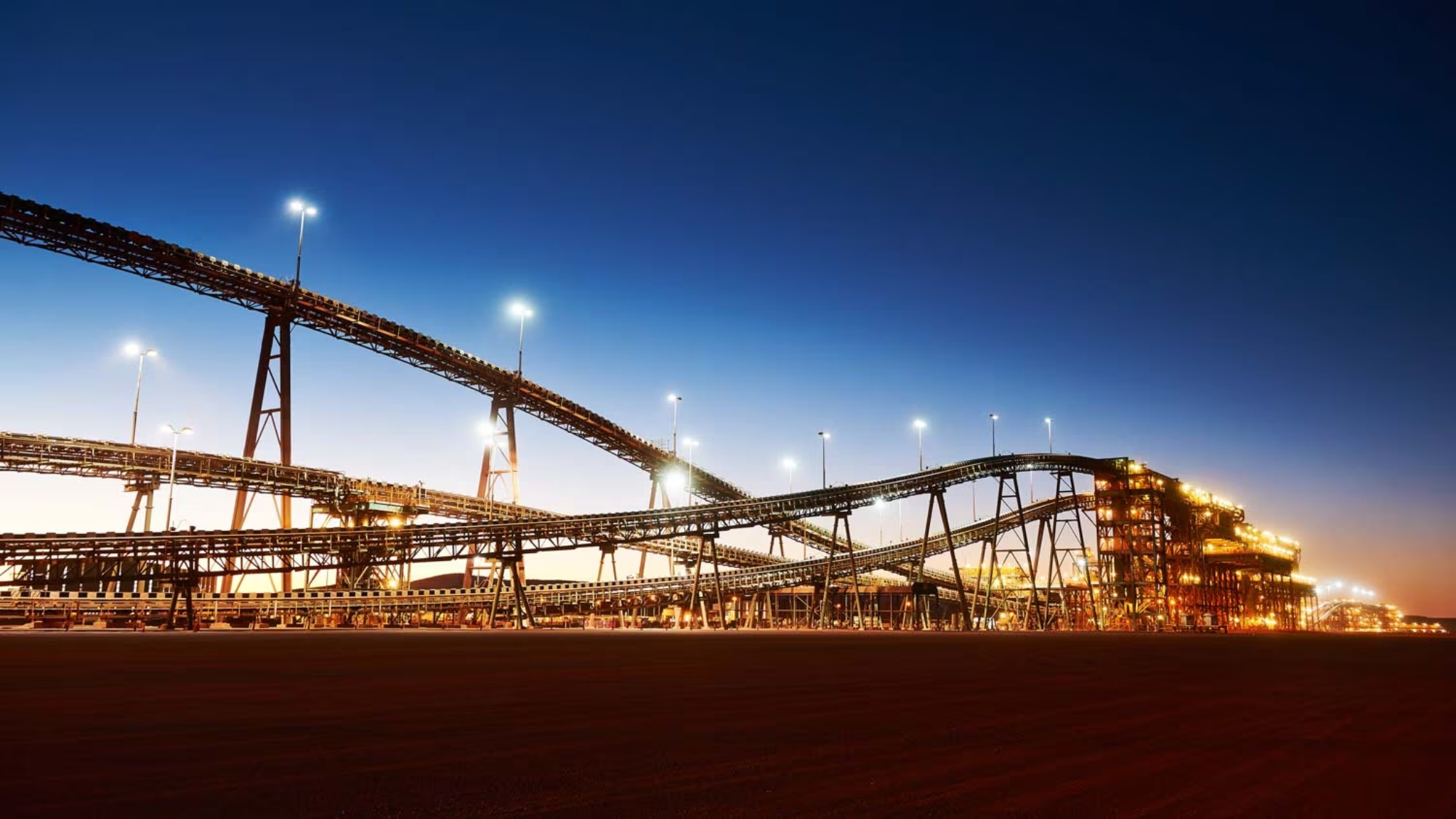
That expertise sits at the heart of Fortescue’s Iron Bridge magnetite project in the Pilbara, Western Australia – a US$2.6 billion investment designed to produce around 22 million tonnes per annum of high-grade magnetite concentrate from an orebody 145 km south of Port Hedland.  Fortescue challenged Weir Minerals to help deliver one of the world’s most energy- and cost-efficient magnetite plants, moving away from conventional, power-hungry tumbling mills. 


In 2019, Weir secured a record £100 million order to supply 12 Enduron® HPGRs and GEHO® pumps to Iron Bridge – the world’s largest HPGR installation in an iron ore application. The HPGR-based flowsheet cuts grinding energy by at least 30% versus traditional circuits and significantly reduces wet tailings, delivering major savings in both power and water for Fortescue.


This was followed in 2020 by a £95 million aftermarket contract for components and service over seven years, taking Weir’s total Iron Bridge order book to more than £200 million. The aftermarket scope spans Enduron HPGRs, GEHO and Warman pumps, Cavex hydrocyclones and Isogate valves, underpinning high availability in one of the world’s most advanced magnetite operations. 


To support Iron Bridge and other Pilbara mines, Weir is establishing a new service centre in Port Hedland, providing local repair, rebuild and field-service capability and creating new employment and training opportunities, with a particular focus on Aboriginal participation in the mining workforce. 


For Fortescue, the collaboration with Weir Minerals at Iron Bridge is about more than equipment supply. The co-developed HPGR flowsheet – described by Weir as the first large-scale plant of its kind without tumbling mills – showcases how close OEM–operator partnerships can unlock step-change reductions in energy, water and carbon intensity across the magnetite value chain. For Weir Minerals, Iron Bridge stands as a global reference site for sustainable, high-performance comminution – and a clear example of the role it plays in making modern mining more efficient and more responsible.


Fortescue Head Office

Ground Floor, 256 St Georges Terrace, Perth WA 6000

Phone: +61 8 6218 8888

Company Email
reception@fortescue.com