

One Morning in October 2018
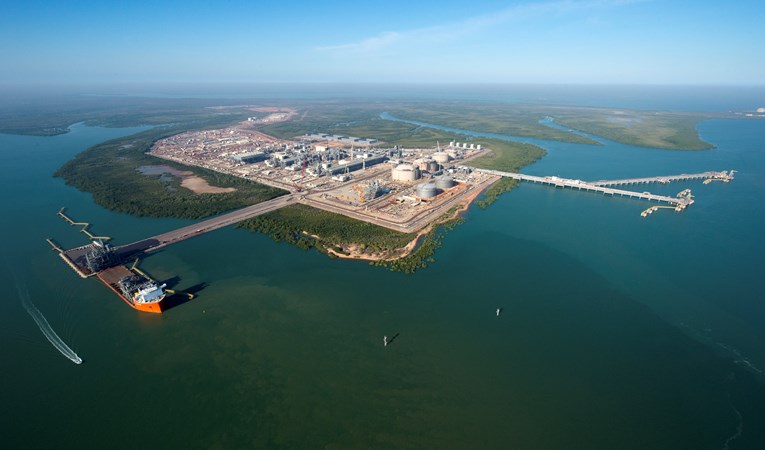
Somewhere in Darwin Harbour, on a cool October morning in 2018, a tanker pulled away from the Bladin Point marine terminal loaded with liquefied natural gas. To anyone watching from the shore, it looked unremarkable — one more cargo ship heading north toward Asia.
But that first LNG cargo from the Ichthys project represented something the energy industry rarely witnesses: the moment a 40-year infrastructure chain fired up end-to-end for the very first time. Hundreds of kilometres offshore, subsea wells were pushing gas into a semi-submersible platform the size of a city block. That gas was travelling through 890 kilometres of underwater pipeline — the longest subsea pipeline in the southern hemisphere — before being chilled to minus 162 degrees Celsius and loaded aboard that tanker.
It had taken more than a decade and tens of billions of dollars to get to that moment. And the hard part — keeping the chain running, year after year, for forty years — was only just beginning.
The finish line was never construction completion. It was the first time the chain could run end-to-end, predictably — and every day since is a repeat performance.
Why Ichthys Is Different From Every Other LNG Project
Most LNG plants are complicated. Ichthys is something else entirely: it is three separate megaprojects — an offshore processing hub, a near-900-kilometre subsea pipeline, and an onshore liquefaction plant — that were engineered to behave like one.
That distinction sounds technical. Its consequences are deeply practical. In a conventional LNG project, a problem in one area stays relatively contained. At Ichthys, a constraint anywhere in the chain becomes a constraint everywhere. A drop in offshore processing efficiency backs up into pipeline throughput. A scheduling delay onshore becomes an inventory problem at sea. Nothing politely waits.
This is why engineers who have worked on Ichthys often describe it not as a construction project but as a system integration challenge at infrastructure scale. The engineering of each individual component — impressive as it is — matters less than the engineering of the interfaces between them.
The question Ichthys answers — and answers better than almost any comparable project — is this: how do you turn extreme geographic distance into reliable export capacity, and keep it that way for four decades?
The Floating Factory
Start 220 kilometres offshore, in the Browse Basin off Australia's northwest coast, at a depth of around 250 metres. This is where the Ichthys Explorer sits — a semi-submersible central processing facility (CPF) moored permanently to the seabed by 28 chains weighing more than 25,000 tonnes in total.
The Ichthys Explorer is, by any measure, a remarkable piece of engineering. Its topsides weigh around 78,000 tonnes — roughly equivalent to eight Eiffel Towers. It was fabricated in South Korea and towed approximately 6,000 kilometres to its permanent position. It does not move. It will not move for the life of the project.
But what makes the CPF strategically significant is not its size. It's its function. This is not simply a platform that collects gas and sends it down a pipe. It is the front end of a processing plant — separating gas from liquids, managing pressures, conditioning the flow — running continuously, in a cyclone-prone ocean, with no ability to simply drive a maintenance crew out to it on short notice.
That reality shapes every decision made about the CPF. Maintenance campaigns require offshore vessels, marine weather windows, and months of planning. Equipment reliability is not a preference; it is a commercial necessity. When the CPF is running well, the rest of the chain can run. When it isn't, nothing can.
The CPF is not a platform that was installed and forgotten. It is a living industrial facility — and its reliability is the single biggest variable in Ichthys's commercial performance.
This is already visible in how INPEX is managing the CPF's long-term future. Ichthys Phase 2 includes a booster compression module — a new piece of major equipment, weighing around 4,800 tonnes, that will be added to the CPF to maintain production levels as reservoir pressure naturally declines over time. McDermott won the engineering and construction scope. Heerema was appointed to transport and install the module in a single lift offshore.
The fact that INPEX is adding a major offshore module mid-lifecycle is itself telling. It means the project's designers understood from the start that sustaining plateau production over 40 years is not a given — it is a programme of continuous investment.
890 Kilometres of Unforgiving Infrastructure
The number that most effectively communicates Ichthys's ambition is not the LNG train capacity or the platform weight. It is 890 kilometres.
That is the length of the gas export pipeline — a 42-inch steel tube running from the offshore CPF to the onshore plant at Bladin Point in Darwin. It crosses water depths of up to 250 metres. At the time of installation, INPEX described it as the longest subsea pipeline in the southern hemisphere and among the longest anywhere in the world.
A pipeline of this scale is not infrastructure you install and forget. It becomes a lifecycle programme in its own right: regular inspection runs, anomaly assessment, repair readiness planning, and marine logistics to support any intervention. The pipeline doesn't just move gas — it enforces discipline on the entire system. If compression is inadequate offshore, or if hydraulic conditions aren't calibrated correctly, the pipeline will expose those problems directly in the form of constrained throughput at the liquefaction plant.
In this sense, the pipeline is the project's truth-teller. It cannot be negotiated with. It simply reflects the reality of the upstream and transmits it, 890 kilometres, to the plant.
The Power Decision That Changed the Economics
When INPEX made the decision to build a combined-cycle power plant at Bladin Point rather than a conventional open-cycle installation, it was making a calculation that goes to the heart of how LNG projects actually make money.
The combined-cycle plant — capable of generating up to 490 megawatts at efficiencies above 50 per cent — consumes less fuel gas than a traditional turbine-based system. That saved fuel gas doesn't disappear. It gets redirected into LNG production.
The arithmetic is straightforward but powerful. In a facility running continuously for decades, a meaningful improvement in fuel efficiency compounds into significant additional export volumes. LNG is sold under long-term contracts to buyers in Japan, South Korea, and Taiwan. Every additional cargo delivered is revenue. Every cargo lost to avoidable fuel consumption is margin left on the ocean floor.
This is the kind of decision that rarely makes headlines but defines the commercial character of a project over its lifetime. The 490-megawatt combined-cycle plant at Bladin Point is, in the plainest terms, a production lever disguised as a piece of utility infrastructure.
Who Owns It — and Why That Matters
Ichthys is operated by INPEX, the Japanese energy company, which holds a 67.82 per cent interest. TotalEnergies of France holds 26 per cent, having reduced its stake from a higher position in 2018. The remaining interests are held by a group of Japanese utilities and Asian energy companies including Osaka Gas, JERA, Kansai Electric, Toho Gas, and Taiwan's CPC.
Look at that ownership structure and you are looking at the customer base. The Japanese utilities holding small equity stakes are, in many cases, also the buyers of the LNG. This is deliberate. Long-term offtake agreements and equity participation are two sides of the same commercial logic: buyers who own a piece of the project have a direct incentive to ensure it keeps running reliably.
INPEX has also quietly consolidated its position over time, acquiring additional interests — including some previously held by Tokyo Gas — to reinforce its control as operator. In a project designed to run for four decades across multiple geopolitical and energy market cycles, decision-making authority is not a minor consideration. The operator needs to be able to act quickly on lifecycle investment, maintenance strategy, and upgrade decisions without being slowed by complex partner governance.
The Operating Machine: Keeping the Chain Running
The construction of Ichthys took years and generated headlines. The operation of Ichthys will take forty years and generate almost none — unless something goes wrong.
That invisibility is, in one sense, the goal. But sustaining that invisibility requires a parallel infrastructure of service providers, inspection regimes, logistics chains, and planned maintenance campaigns that is almost as complex as the original build.
Several long-term operating partnerships give a clear picture of where the critical dependencies lie. GR Production Services holds a multi-year operations and maintenance support contract covering both offshore and onshore facilities, with a specific focus on shutdown planning — the high-stakes, time-critical periods when the plant is taken offline for major work. EnerMech operates a five-year contract for inspection services and lifting equipment across the project, covering the cranes and rigging that make any offshore intervention physically possible. Altrad Services handles coating and insulation at Bladin Point — unglamorous work, but a direct line to corrosion management and long-term structural integrity. MMA Offshore provides the Platform Supply Vessels that keep the CPF physically connected to the world.
These are not peripheral relationships. They are the hidden operating system of Ichthys — the network of specialised capabilities that determines whether a scheduled maintenance shutdown takes three weeks or five, whether an offshore crane is available when it's needed, and whether a corroded pipe section becomes a planned repair or an unplanned outage.
In a fully integrated value chain, disruptions don't stay local. A crane unavailable offshore becomes a delayed onshore cargo. The chain is unforgiving — and that is precisely why it is valuable when it runs well.
Climate, Carbon, and a 40-Year Asset in a Changing World
Ichthys was designed and sanctioned in a different era of energy policy. Its 40-year operating horizon now spans a period in which the world's approach to carbon emissions will be transformed — though in what direction and at what speed remains genuinely uncertain.
INPEX has been public about the tension. The project produces LNG — a fuel that, when it displaces higher-carbon alternatives like coal in Asian power generation, delivers a net emissions reduction. That argument is defensible and widely made by the LNG industry. It is also contested, particularly as the economics of renewable energy improve and as major Asian buyers begin to set their own net-zero targets.
What is notable about Ichthys's response is that it has sought to embed efficiency and emissions management into the project's operating logic rather than treat decarbonisation as an external compliance task. The combined-cycle power plant, with its substantially lower fuel consumption, reduces the carbon intensity of every tonne of LNG produced. INPEX has also publicly discussed proposals to modify the onshore acid gas removal unit to improve CO2 capture and compression capability — a meaningful technical step, even if the full carbon challenge of an LNG project goes well beyond what any single upgrade can address.
The honest position is this: Ichthys is an asset with a long life ahead of it, operating in a world that is moving — unevenly and not always rationally — toward lower-carbon energy. Its operators are making investments in efficiency and carbon management that are technically credible. Whether those investments are sufficient to sustain the project's social and commercial licence over the full 40-year horizon depends on factors well outside any single project's control: Asian energy policy, the pace of renewable deployment, and the evolving expectations of capital markets and regulators worldwide.
That is not a reason to dismiss the project. It is a reason to watch it carefully.
What Ichthys Teaches the Infrastructure World
No two megaprojects are identical. But Ichthys has produced a set of lessons that translate directly to any large, remote, multi-asset infrastructure system — and they are worth stating plainly.
The first is that interfaces are the real project. The offshore platform, the pipeline, and the onshore plant would each have been a major undertaking independently. The achievement at Ichthys was engineering the handoffs between them into a single operating system. Most megaproject failures happen at the seams, not in the centres.
The second is that sustaining plateau is an investment programme, not a feature of original design. The Phase 2 booster compression module is the clearest evidence of this: reservoir conditions change, and the infrastructure must respond. Projects that treat first gas as the finish line invariably under-invest in the lifecycle management that determines whether the asset earns its returns.
The third is that logistics is a permanent critical path. Offshore access, vessel availability, crane readiness, weather windows — these variables don't stop mattering after handover. They become the hidden determinants of outage duration and intervention speed, year after year.
And the fourth — perhaps the most transferable — is that in an integrated chain, reliability is not a local problem. A failure anywhere becomes a problem everywhere. That interdependence is what makes Ichthys difficult. It is also what makes it, when running well, exceptionally valuable.
A Machine That Must Keep Earning Its Place
Ichthys is often described using superlatives. Longest pipeline. Largest semi-submersible CPF. Most integrated LNG project in the southern hemisphere. Those superlatives are accurate, and they are also beside the point.
The more interesting truth is that Ichthys is a machine — one that must be restarted thousands of times over its operating life, that must weather cyclones and market downturns and shifting energy policy, and that must keep delivering export cargoes reliably enough to justify the extraordinary infrastructure built to produce them.
That machine was designed once. Now it must be operated, maintained, upgraded, and defended commercially, every single day, for forty years.
The first cargo left Darwin in October 2018. There are several thousand more to go.
—
BE Global Infrastructure covers major infrastructure systems worldwide.