

10. Drake neglects to patent oil drill
In 1858 Seneca Oil Company sent Edwin Drake to Titusville, Pennsylvania, to investigate ways to extract oil from the ground. Oil bubbled up in the area, and sometimes it was collected from the surface, but the idea of drilling for it, in the same way that salt mines were drilled at the time, seemed far-fetched.
Drake met with one failed attempt after another, but finally figured out a way to get a cast-iron pipe deep into the earth’s surface, and in August 1859 he struck oil 69 feet down. Oil was officially in business.
But neither Drake nor Seneca had the business sense to patent the drill. Other entrepreneurs began using this method to extract oil in the surrounding areas, and an oil boom began.
The increased output led to lower prices, which put Drake out of business just four years after his invention launched the boom.
By 1870 he was sick and impoverished, but the people of Titusville convinced the Pennsylvania legislature to grant him a $1,500 stipend, which was paid annually until his death in 1880.
9. Mars passes on product placement in E.T.
In 1981 Universal Studios contacted Mars Inc. and asked permission to use its M&M’s candy in a family-friendly movie it was filming. This is a standard practice in the film industry; product placement deals provide filmmakers with extra cash and/or promotion opportunities. The director was proposing cross-promotion: he’d provide exposure for M&M’s, and Mars would help promote the movie.
The film was E.T. The Extra-Terrestrial, directed by Stephen Spielberg, and the M&M’s were needed for a key scene in which Elliott, the boy who befriends the alien creature, uses candies to lure E.T. into his house.
But Mars turned the deal down.
So Universal Studios went to Hershey’s and made a deal to use a new product called Reese’s Pieces, candy-coated peanut butter bits. Initial sales of Reese’s Pieces had been light, but when E.T. became a top-grossing film, sales exploded.
Hershey executives called it the biggest marketing coup in history and said the exposure the product received as “E.T.’s favorite candy” was worth millions of dollars.
8. CBS & NBC not ready for football
In 1969 football wasn’t the ratings behemoth it is today, but it was becoming very popular in the US as a broadcast television sport. Games were mainly played on Sunday afternoons, but NFL commissioner Pete Rozelle envisioned playing one game a week during prime time to capture a larger TV audience, so he approached both the CBS and NBC networks with the idea. Both rejected it, since they already had successful prime-time programming arranged.
That left ABC, where producer Roone Arledge immediately saw the show’s potential. He paid $25.5 million for a three-year, 39-game package, but it was money well spent. Monday Night Football went on to become the second-longest running show in prime-time television, behind only 60 Minutes.
The show has since moved on to ESPN, but it cemented ABC Sports as a top player in the field and gave the youngest of the three broadcast networks a solid ratings base.
7. ABC gives Cosby thumbs-down
ABC has also made its share of gaffes. In 1984 Bill Cosby gave the network first shot at buying a sitcom he’d created—and would star in—about an upscale African-American family. But ABC turned him down, apparently believing that sitcoms were dead and that viewers wouldn’t watch a show portraying blacks as wealthy, well-educated professionals.
So Cosby pitched his show to NBC, which was stuck in third place and had little to lose by taking a chance. The network picked up The Cosby Show, and it became a smashing success, helping NBC build a comedy lineup that would be known as “must-see TV.”
The Cosby Showremained the number one show for five straight years and was a ratings winner for its entire eight-year run, pulling in nearly 30 million viewers a night. It lifted NBC from its ten-year status as a last-place network to first place, resurrected TV comedy, made Cosby an A-list celebrity, and became the most profitable series ever broadcast.
6. New Coke
In April 1985 the Coca-Cola Company decided to change the formula for its flagship beverage. The company’s market lead over its competitors had been shrinking for several years, so Coca-Cola opted for a new formula that had been preferred in taste tests of nearly 200,000 consumers. It was the first formula change in nearly a century for the world’s most popular soft drink.
Company executives didn’t foresee the consumer backlash that ensued. Fans of the original formulation (now referred to as “Coca-Cola Classic”) bought up as much of their beloved soft drink as they could before the new formula (branded as “New Coke”) took over grocers’ shelves. Calls and letters poured into company headquarters berating execs for the change. It was a marketing disaster.
The company had underestimated the bond consumers felt for the old Coca-Cola brand.
The firestorm ended a few months later with the return of the original formula. Later, the name of the new taste of Coca-Cola was changed to Coke II; the product is no longer available in the United States.
5. Ford resists changing the Model T
When Henry Ford introduced the Model T in 1908, it was state-of-the-art. As the first truly affordable quality automobile, the Model T revolutionized American culture, and it was the only car the Ford Motor Company made.
As the auto industry grew and competition stiffened, everyone in the company—from Ford’s employees to his own family—urged him to incorporate new features, but he refused.
In 1925, after more than 15 years on the market, the Model T was pretty much the same car it had been when it debuted.
While Ford rested on his laurels, his competitors continued to innovate. Sales of the Model T began to decline as other automakers offered modern mechanical features and styling not available with the Model T.
Ford’s market share slid as companies like Dodge and General Motors steadily gained ground. By the time Ford announced a replacement for the Model T in 1927, the company had already lost the battle. That year, Chevrolet sold more cars than Ford for the first time, and Ford slipped back into second place for many years.
4. Excite declines buying Google
In 1994, six Stanford students created a primitive search engine called Architext. The following year, with $3 million in financing, Architext was re-launched in December as Excite.
Early in 1996 Excite brought on George Bell as CEO. Bell’s first move was to acquire two other search engines, Magellan (for an undisclosed price) and WebCrawler (for $19.8 million). In quick succession Bell scooped up Netbot for $35 million, iMall for $425 million, and Blue Mountain Arts for $780 million.
In 1999 Larry Page and Sergey Brin, the founders of Google, offered their creation to several companies, including now-defunct Alta Vista, which passed, and Yahoo, which also passed but had a strong enough product to stay afloat. An offer was then made to Bell, who considered the $1 million asking price too high. A second offer at $750,000 was also rejected.
Bell stepped down as CEO in September 2000 with Excite’s stock trading at $15.38 a share—down from $128.34 in the first quarter of 1999, a 90 percent drop. By the third quarter of 2001 it had fallen to $1 a share. Chapter 11 bankruptcy followed.
Google is now the runaway leader in search engines, with 65.4 percent of all Internet searches and a market capitalization of $167 billion.
3. IBM buys one-time rights to PC-DOS
In 1980 IBM contacted Bill Gates, founder of Microsoft, to discuss home computers, and Gates suggested having the BASIC computer language written into the ROM chip. Microsoft had already produced several versions of BASIC for various computer systems, so Gates agreed to write a version for IBM.
As an operating system for the new computers, since Microsoft had never written an operating system before, Gates suggested that IBM look into CP/M (Control Program for Microcomputers), the most successful operating system of the time, written by Gary Kildall of Digital Research.
IBM failed to make a deal with Kildall, so it went back to Gates and gave Microsoft the contract to write the new operating system, which became known as the Microsoft Disk Operating System (MS-DOS), and IBM’s version was called PC-DOS.
Gates then talked IBM into letting Microsoft retain the rights to market MS-DOS separate from the IBM PC project, and he proceeded to make a fortune from the licensing of MS-DOS.
2. Western Union hung up on telephone
In 1876, Gardiner Greene Hubbard offered William Orton, president of the Western Union Telegraph Company, a chance to purchase the patent for a new invention for $100,000.
Orton replied directly to the inventor, Alexander Graham Bell, that the invention, while interesting, had no commercial possibilities, calling it “an electrical toy.”
Western Union already had a nationwide network of telegraph wires in place, and Bell had demonstrated that his invention, the telephone, worked well on telegraph lines. All the company had to do was hook telephones up to its existing lines and it would have had the world’s first nationwide telephone network.
So Bell kept the patent, and in a few decades his telephone company, American Telephone and Telegraph (AT&T), became the largest corporation in America, and his patent became the most valuable patent in history.
Orton later spent millions of dollars challenging Bell’s patents while attempting to patent his own telephonic instrument, which he was ultimately forced to hand over to Bell.
1. Decca Records turns down the Beatles
In December 1961, an executive in charge of evaluating new talent for Decca Records traveled to Liverpool to watch a local rock ‘n’ roll band. He decided they had talent and invited them to audition.
On New Year’s Day in 1962 the group auditioned by performing 15 songs in just under an hour. All the material was selected by the band’s manager, Brian Epstein, who decided on a selection of covers that the band had performed in various clubs over the years, interspersed with three songs written by band members.
After the audition, they were told they would be notified of the decision in a few weeks. They went home and waited for an answer.
Decca finally rejected the group, saying that guitar groups were on the way out and that the group had no future in show business.
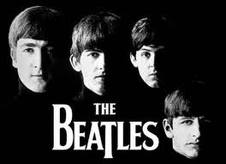
The group was, of course, the Beatles, and they eventually signed with an EMI Records subsidiary, Parlophone, to become the most popular band of all time.
Luckily for Decca, they signed the Rolling Stones in 1963.